You’ve surely heard a lot about the vagus lately. It’s popping up in many stories for a reason, just like polyvagal theory.
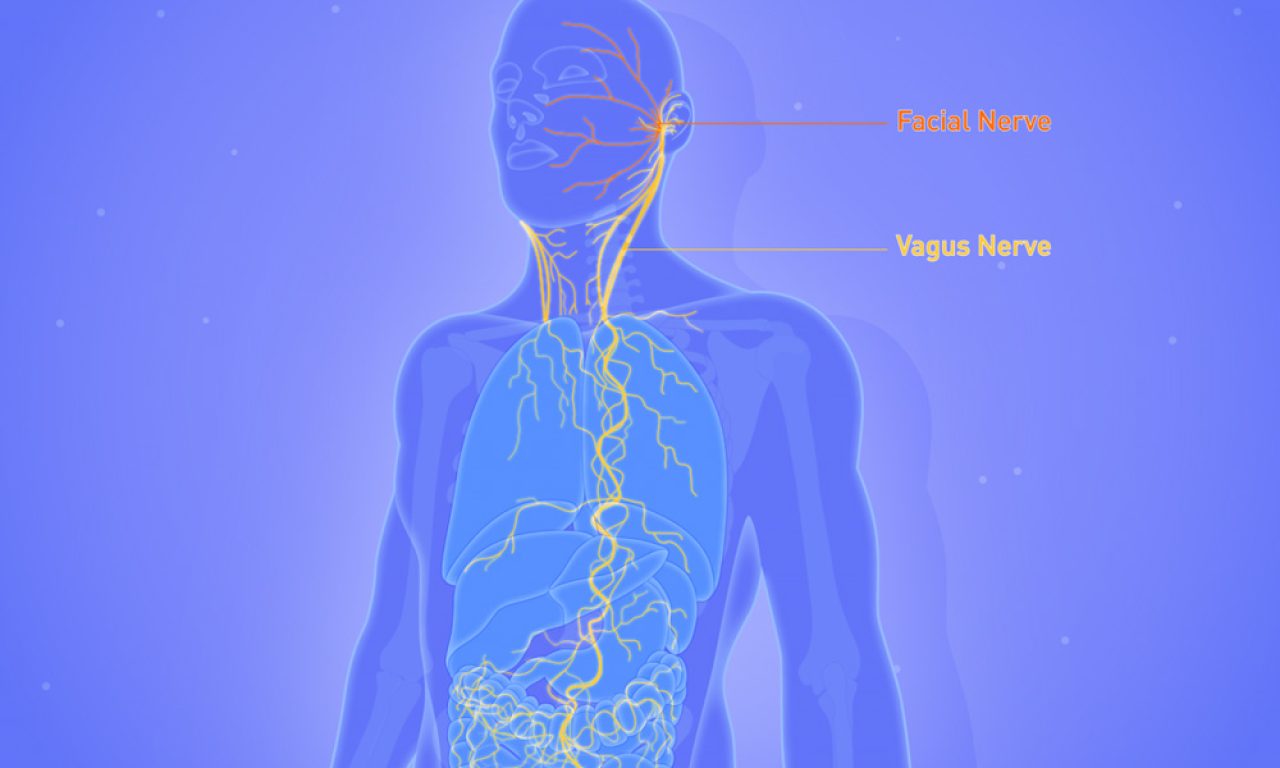
The vagus is said to be the main nerve of our parasympathetic system. It’s called vagus in Latin because that means “wandering” (vagabond), and as a cranial nerve—that is, one that originates in the brain—it wanders all the way down to the intestines. It is also the longest cranial nerve. Today, a lot is known about the connection between our brain and our gut, and this nerve only further substantiates all the theories.
What is the function of the vagus nerve?
The vagus nerve has both sensory and motor functions.
It controls the functions of internal organs: digestion, heart rate, the rhythm of inhalation and exhalation, and reflex actions such as coughing, sneezing, swallowing, and vomiting.
We feel the touch behind the ear thanks to this nerve (and we often touch that area in face yoga), as well as on the outer part of the ear canal and on certain parts of the throat. It also plays a small role in taste sensation, down by the root of the tongue.
How else does it work? What is the polyvagal theory?
We all know that in today’s Western world we are continuously exposed to external stressors. That’s what can trigger a stress reaction. We are the ones who, based on various internal criteria, “determine” how stressful our reaction will be.
Very often, external circumstances throw us into the fight-or-flight model, which is controlled by the sympathetic division of our autonomic nervous system. To prepare for these types of reactions, the body releases adrenaline and cortisol, which race through our system to ensure we can respond.
The vagus is a counterbalance; it’s our parasympathetic system, that is, the part of the nervous system that brings relaxation, and that’s why it’s important to maintain good tone in it. Specifically, its ventral part does this.
But polyvagal theory says there’s another branch of the vagus—the dorsal one—and that’s the one that triggers the “freeze” response. These are the situations in which we’re literally frozen, in which we don’t know how to react or what to do. Speechless in front of the board or without the right answer, for example, when someone verbally attacks us on the street.
So, in summary:
Dorsal vagus: disengaging from things we don’t know how to handle
Sympathetic: fight or flight response
Ventral vagus: I feel good, I am calm and connected to others.

What are we like when our vagus nerve is “working well”?
A healthy vagus tone leads to emotional regulation, better connection, a strong immune system, good digestion, stable blood sugar, a positive mood, healthy blood pressure, and improved regulation when exposed to an external stressor.
How do we “build up” our vagus nerve?
- by gargling and singing
- Foot massage – we can also do it ourselves using our fingers or a gua sha crystal.
- by submerging the face in ice water – the forehead, eyes, and upper cheeks are submerged, which lowers the heart rate, stimulates the intestines, and boosts the immune system.
- with laughter
- by eating fibrous food which slows bowel movements and thus sends a similar impulse back to the brain
- conscious breathing
How does yoga work?
One of the best ways to stimulate the vagus nerve is to practice yoga.
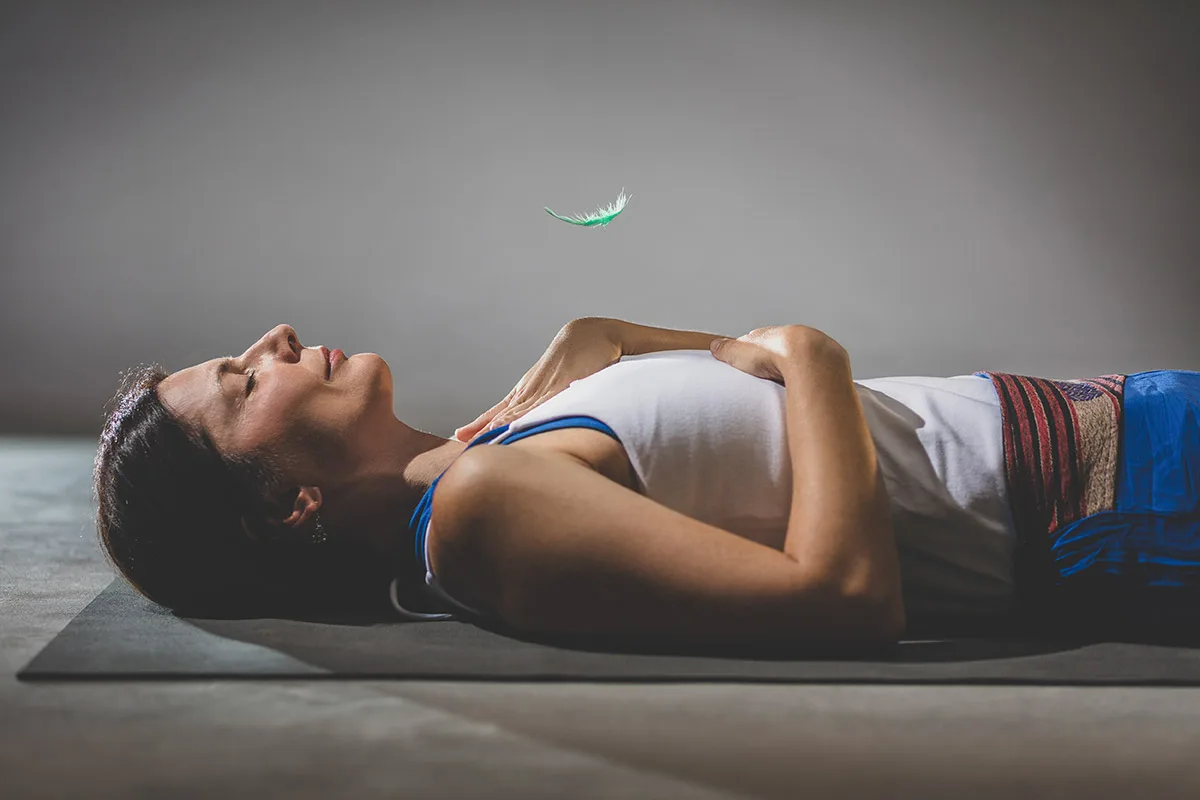
In yoga practice, whether it’s the movements we perform, the meditations, or the mindful breathing exercises, we use deep, abdominal, or diaphragmatic breathing.
The simplest advice I can give you is to slow your breathing, lengthen your exhale, expand your belly on the inhale, and relax your diaphragm area. The goal is to inhale and exhale six times per minute.
Conscious, controlled breathing activates the ventral vagus, the one that tells us we feel safe, and deactivates the dorsal vagus and the sympathetic nervous system.
The lungs are the only part of our autonomic nervous system that we can consciously influence ourselves, and thus send a message to our body.
And of course, an add-on: face yoga.
Here too, we’re acting on our vagus nerve: by stimulating the face we promote relaxation and vagus activation, and by automatically slowing our breathing we once again close the loop back to the vagus.
In addition, exercises that involve using the tongue and activating it, as well as those that involve eye movements, positively stimulate the vagus nerve.
Now you know why we often roll our eyes and stick out our tongues in face yoga!! Practice with our packages, which you can find at the following link.
The vagus nerve is also stimulated by moving the neck, stretching the sides of the neck, and those gentle massages behind the ear during lymphatic drainage!
Facial massage will generally have a beneficial effect on the nervous system at night. In the next blog post, we will write about the seasons and our face.